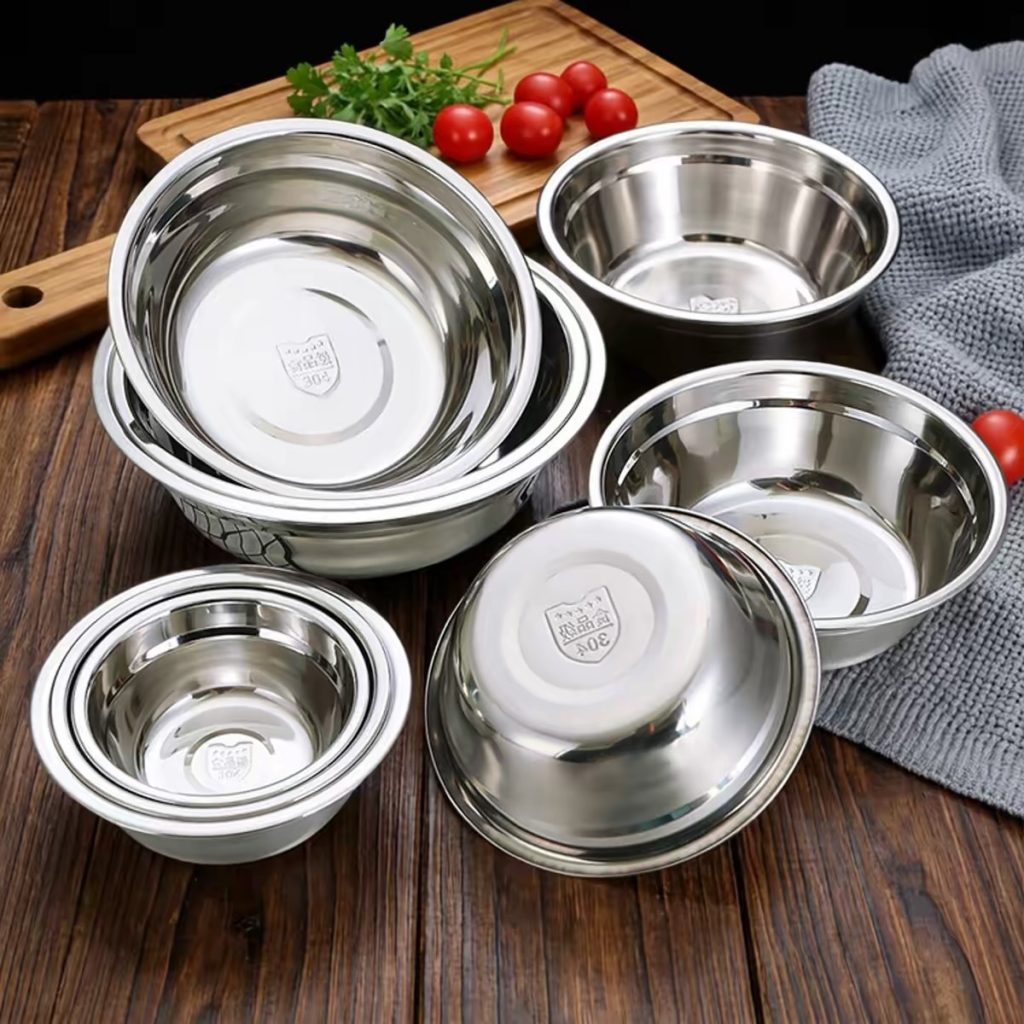
Most stainless steel kitchenware made in China is either grade 304 or grade 201. They look almost the same when new, but they behave differently over years of washing, salt and acid. Here is how to choose.
What is the difference?
304 contains about 18% chromium and 8% nickel. 201 replaces part of the nickel with manganese, which lowers the cost. Nickel is what gives 304 its strong resistance to rust and pitting.
Corrosion
For anything that touches salty, acidic or wet food every day, such as salad bowls, prep basins, steamer plates and colanders, 304 lasts much longer. 201 can show rust spots after long contact with salt water or vinegar, especially in humid climates.
Magnetism
Neither grade is reliably identified with a magnet. Cold working during deep drawing can make 304 slightly magnetic, and some 201 is non-magnetic. Ask your supplier for a material certificate, or test with a nickel test solution.
Price
201 is usually 20 to 30 percent cheaper. It is a reasonable choice for dry-use items such as trays for bread, display plates or decorative pieces.
Our recommendation
- Food prep, cooking, steaming and washing: choose 304.
- Dry serving, display and budget promotions: 201 can work.
- Export to the EU or US for food contact: 304, with test reports for LFGB or FDA when required.
Not sure which grade fits your market? Send us the product and destination, and we will recommend a grade and quote both options.